Home › Services
Aluminum and ornamental fences in Fort Wayne for front yards and pools
Ornamental aluminum is the fence people pick when they want a boundary without hiding the house. It looks like the black iron fences of older neighborhoods, it will not rust in a wet Indiana spring, and it can follow a sloped yard without leaving awkward gaps. It is also the usual material around backyard pools, where the gate hardware matters as much as the panels. Not all aluminum fence is equal, though. Grade, picket and rail profile, powder coat quality, panel style and how the posts are set all change how it looks and how long it stays straight. This page covers those choices for Fort Wayne and Allen County homeowners so the options make sense before anyone writes a proposal.
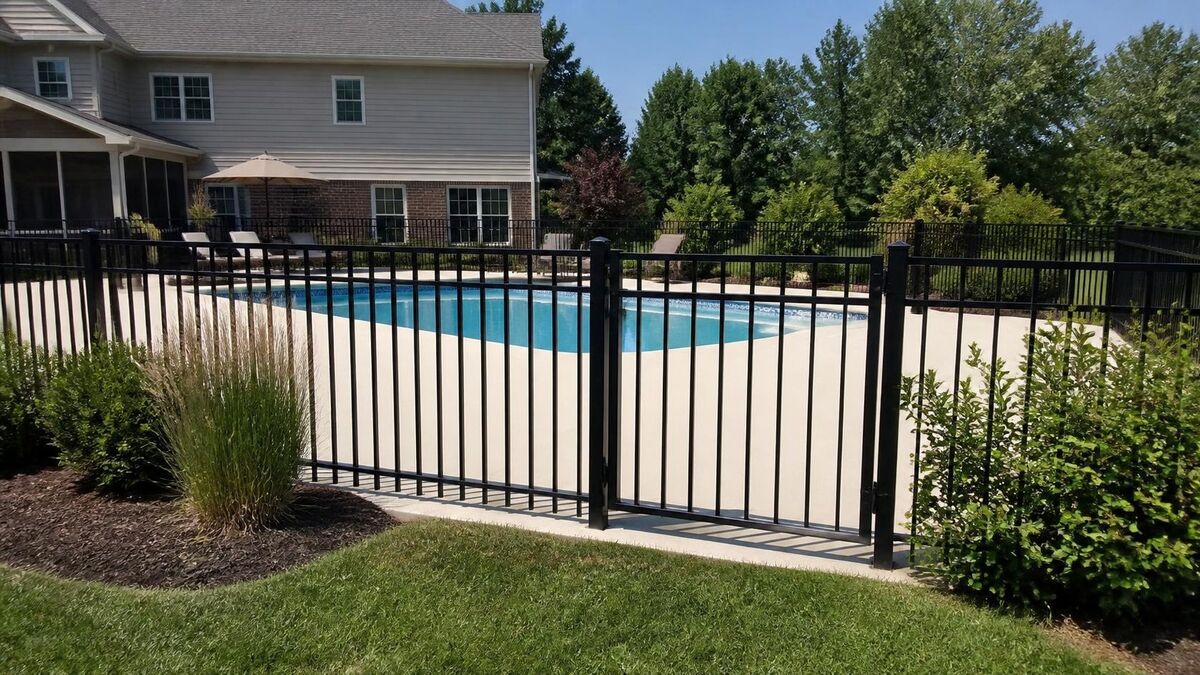
Why ornamental aluminum ends up in front yards and around pools
Most residential fences are about blocking something. Ornamental aluminum is about framing it. The open picket design keeps sight lines to the street, shows off landscaping, and gives a front walk or a corner lot a finished edge without walling the house off from the neighborhood. In older parts of Fort Wayne with brick homes and mature trees, a black picket fence can look like it has always been there.
Around pools, aluminum earns its place for practical reasons. It does not corrode from splashed water, it does not need staining, and gates can be fitted with self-closing, self-latching hardware that a pool barrier rule calls for. It also lets a parent see the water from the kitchen window, which a solid fence does not. If the goal is privacy instead, a vinyl fence or a wood privacy fence is the better fit.
Aluminum, steel and wrought iron: how the three materials differ
The phrase "wrought iron fence" gets used for nearly any black metal picket fence, but three very different materials hide behind that look.
- Powder-coated aluminum: light, easy to handle, and naturally resistant to corrosion because aluminum forms its own protective oxide. It is the most common residential choice and needs very little upkeep beyond washing.
- Ornamental steel: galvanized steel pickets and rails under a powder coat. It is stronger and more rigid than aluminum of the same size, which matters for security or heavy impact, but any chip that reaches bare steel will start to rust.
- Wrought iron: true wrought iron is rarely made today. Most fences sold as iron are solid mild steel, often custom fabricated. It is heavy, very strong and beautiful, and it needs periodic scraping and painting to stay ahead of rust.
- Bottom line: for most homes in northeast Indiana, aluminum gives the iron look with the least maintenance. Steel or custom iron makes sense where strength or a specific historic match is the priority.
Residential, commercial and industrial grades of aluminum fence
Manufacturers sell aluminum fence in grades that differ in picket size, picket wall thickness, rail size and post size. The residential tier has slimmer pickets and rails, which is enough to mark a yard, enclose a garden or keep a small dog in. Commercial grade steps up the dimensions and the wall, so the fence resists bending when a ball, a bike or a large dog hits it. Industrial grade is heavier again and is built for apartment complexes, schools and public spaces.
Grade names are not standardized across brands, so compare picket, rail and wall dimensions instead of labels. With active dogs, a commercial-grade panel at a modest height often beats a tall residential panel that flexes whenever someone leans on it.
Picket tops, rail layouts and the details that set the style
Within a grade, the look comes down to the picket top, how many rails there are and where they sit. A few common choices:
- Flat top: the top rail caps the pickets for a clean, modern line. It is the most popular front-yard style and the friendliest around kids.
- Pressed spear or point top: the pickets extend above the top rail and end in a point. It reads as traditional and discourages climbing.
- Finial tops: decorative castings, such as spears or fleur-de-lis shapes, fixed to each picket for a more formal look.
- Two-rail versus three-rail: a three-rail panel is stiffer, and putting the top rail slightly below the picket tops gives the classic estate fence appearance.
- Puppy pickets: extra short pickets set between the full ones along the bottom, closing the gap so small dogs and cats cannot squeeze through.
- Decorative add-ons: rings, scrolls and arched gates. These add character but also add cost and sometimes create footholds, which matters near a pool.
Powder coat, corrosion and what keeps the finish looking new
Aluminum itself does not rust the way steel does, but the finish is still the part of the fence you see every day. Good ornamental aluminum is cleaned and pretreated with a conversion coating before the powder is applied and baked, so the paint bonds chemically instead of just sitting on the surface. Poorly prepared panels can start to chalk, fade or bubble at scratches, particularly on the south and west faces that take the most sun.
Road salt spray along busy streets, fertilizer overspray and sprinklers hitting the same section all season wear on any coating. Hose the fence off a couple of times a year, touch up nicks with matched paint, and ask whether the manufacturer's finish terms are in writing.
Rackable versus stepped panels on a yard that does not sit flat
Allen County is mostly flat, but most individual yards are not. Swales for drainage, a slope toward a pond, or a grade change at the side of the house will all show up along a fence line, and ornamental panels handle that in one of two ways.
Stepped installation keeps every panel level and drops each one a little lower than the last at the posts, like a staircase. It looks crisp and formal, but it leaves triangular gaps under the low end of each panel on a steady slope, which can let a small pet out. Rackable panels are built so the pickets can pivot on the rails, letting the whole panel lean to follow the ground while the pickets stay plumb. Racking keeps the bottom gap even and usually looks smoother on gentle grades. Every rackable panel has a limit set by the manufacturer, and steeper slopes may need a mix of racking and stepping or custom panels. The general approach to grade on all fence types is covered on the fence installation page.
Setting posts for ornamental panels
Ornamental aluminum is less forgiving than wood or chain link about post placement. Panels come in fixed widths and slide into punched holes or brackets on the posts, so a post that is an inch off can mean a panel that will not fit. Experienced installers usually set posts as they go rather than digging every hole first:
- The line is strung and the first end or corner post is set plumb in concrete.
- The first panel is attached, and its far end locates the next post hole exactly.
- That post is set plumb and to height, the panel is checked for level or rack, and the process repeats down the line.
- Gate posts get extra attention, often a heavier post and a larger footing, because a swinging gate puts constant leverage on them.
- Where the fence crosses a patio or pool deck, posts can be core-drilled into existing concrete or surface-mounted on base plates, depending on the slab and the manufacturer's directions.
Clay, frost and keeping ornamental posts plumb through the winter
A lean that would go unnoticed on a wood fence is obvious on a row of evenly spaced black pickets. The heavy lake-plain clay under much of the Fort Wayne area holds water and swells when it freezes, and it can lift a footing that does not go deep enough. Each hole has to bottom out beneath the frozen layer that builds through a hard winter here, and the required depth for your address comes from the building department.
Smooth-sided footings, concrete crowned to shed water and good drainage around the posts all help. If you have an older metal fence that has already shifted, the fence repair page explains when posts can be reset and when replacement makes more sense.
Pool barrier considerations for aluminum fence
A pool barrier is a safety system, and it is governed by the code adopted where you live, not by preference. The building department that issues the pool permit sets the actual figures. In general terms, pool barrier rules cover things like:
- A minimum overall barrier height measured from the ground on the outside.
- Maximum spacing between pickets, so a small child cannot slip through.
- Limits on horizontal members and decorative elements a child could use as a foothold to climb.
- Maximum gaps between the bottom of the fence and the ground.
- Gates that open outward, away from the water, and shut and latch by themselves.
- The height and position of the latch release, so it sits out of a young child's reach.
Self-closing gates, self-latching hardware and gate frames
On a pool enclosure, the gate is the part most likely to fail an inspection or fail a family. Self-closing gates use spring-loaded hinges with adjustable tension, and the tension needs to be strong enough to swing the gate shut from any position and engage the latch every time. Self-latching hardware is usually a magnetic or gravity latch designed so the release is at the top, often operated by lifting a knob, and many can be locked with a key.
Outside the pool, gate hardware still matters. Aluminum gates should have a welded frame or a strong bracing design so they do not rack out of square. Wide openings need a heavier post on the hinge side, and double drive gates need a drop rod and a center stop. Check hinges and latches each spring, since frost movement over winter can throw a latch out of line by enough to keep it from catching.
Front-yard design, association rules and what drives the cost
Front-yard fences sit in plain view, so they tend to be shorter and more decorative, and they are often limited by zoning and subdivision covenants. Many associations around Fort Wayne specify black ornamental fence for front or side yards and set a height and style. Check the covenants and the zoning office before choosing a design, and if the association reviews applications, get the approval in writing. Neighborhoods like Aboite, with their association rules and wooded or lakeside lots, are a good example of where this step matters.
Cost moves with fence length, height, grade of panel, picket style and finials, number and width of gates, pool-rated hardware, the amount of racking or custom work the slope demands, posts set into concrete slabs, and removal of an old fence. The contractor prices it after seeing the property. A solid proposal lists the brand and grade, picket and rail dimensions, color, panel style, post size and footing approach, gate hardware and workmanship coverage. Send the address and a few photos to get started.
Aluminum & Ornamental Fences: questions people ask
Is aluminum fence strong enough to keep a large dog in?
It can be, with the right grade and height. Residential-grade panels can flex or bend when a big dog hits them at speed, so heavier commercial-grade pickets and rails are a smart choice for strong or active breeds. Height matters for jumpers, and puppy pickets help with small dogs that might squeeze through standard spacing. Dogs that dig are better contained with a buried barrier along the fence line, which a contractor can add during the installation.
Does aluminum fence rust or corrode over time?
Aluminum does not rust the way steel does. It forms a thin oxide layer that protects the metal underneath. What can deteriorate is the powder coat finish, which may chalk or fade with years of sun, or lift at scratches if the panels were not properly pretreated at the factory. Rinsing off salt spray and fertilizer residue and touching up chips with matched paint keeps the finish looking good for a long time.
Can an aluminum fence go up on a sloped yard?
Yes. Ornamental aluminum handles slopes in two ways. Rackable panels let the pickets pivot so the panel follows the ground while staying plumb, which keeps the gap under the fence consistent. Stepped panels stay level and drop down at each post, which can leave triangular gaps on a steady grade. Each panel style has a manufacturer limit on how much slope it can follow, so steep spots sometimes need custom panels or a mix of both approaches.
Does a pool fence in Allen County need a permit?
Pool barriers are normally reviewed as part of the pool permit, and the building department for your address decides what is required. The adopted code sets the specific figures for barrier height, picket spacing, bottom gaps and latch placement, and those can change over time. Before ordering panels or gates, confirm the current requirements with the local building department, and ask whether the barrier needs its own inspection before the pool is filled or used.
How is aluminum fence different from wrought iron?
Wrought iron and most iron-look fences are solid steel, which is heavier and stronger but rusts wherever the paint fails, so it needs regular scraping and repainting. Aluminum is much lighter, does not rust, and comes powder-coated from the factory, so maintenance is mostly washing. Iron suits custom work or a match to an existing historic fence. Aluminum suits most homeowners who want the look without the upkeep.
How tall can a front yard fence be in Fort Wayne?
Front yard height limits are set by zoning for your address, and they are often lower than what is allowed in back yards. Corner lots may also have sight-triangle rules near intersections and driveways. Subdivision covenants can be stricter than zoning and may dictate style and color too. Check with the city or county zoning office and read your association documents before choosing a height, and keep any approvals with your records.
Talk through your site
Start with the address, what you want done, and a few photographs of the area, including anywhere water sits after a heavy rain.
Related work
Fence Installation
New residential fences laid out, set and finished for northeast Indiana frost and heavy lake-plain clay.
Fence Repair
Heaved and leaning posts, dragging gates, storm damage and rot, and when a repair stops making sense.
Wood Privacy Fences
Board-on-board, shadowbox and stockade privacy fences, and what makes wood last through an Indiana winter.
Vinyl Fences
Low-maintenance vinyl privacy and picket fences, and how they hold up in deep cold and open wind.
Chain Link Fences
Galvanized and black-coated chain link for dogs, kids and back property lines.
Across the metro
Aboite
Southwest-side subdivisions, wooded lots, lakes and ponds, and association rules on height and style.
Huntertown
Fast-growing north-side neighborhoods on flat, freshly graded lots with slow drainage.
New Haven
An older town grid east of the city plus newer edges, mixed fence vintages and replacement work.
Leo-Cedarville
Larger lots and acreage along the Cedar Creek valley, with long runs, grade and tree lines.