Home › Services
Chain link fences in Fort Wayne, built heavy enough to stay tight
Chain link is the fence most people stop noticing, which is exactly why it gets bought on price and regretted later. A good one stays drum-tight for decades, keeps a determined dog in, and shrugs off the wind that sweeps across open Allen County subdivisions. A poor one sags between posts by its third winter and lets a beagle slip out underneath. The difference lives in details a homeowner can check on paper: wire gauge, mesh, coating, post size and wall, and how the fabric was stretched. This page walks through each one so you know what to ask for before anyone digs.
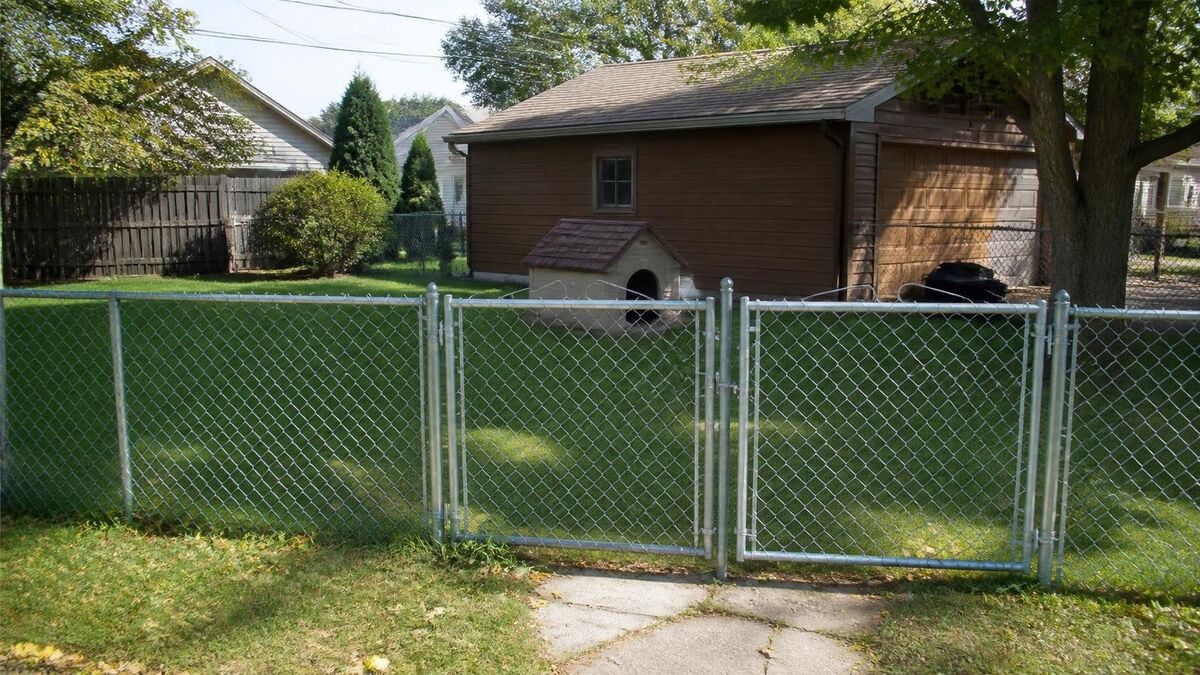
Where chain link earns its place on a Fort Wayne property
Chain link contains pets and small children without blocking the view, marks a back line along a field or ditch where nobody needs privacy, and lets wind and snow pass straight through. Built well, a galvanized fence can outlive two or three wood fences on the same line.
It is not for every yard. For real screening, a wood privacy fence does the job honestly, while slatted chain link only approximates it. Facing the street, black coated fabric or ornamental aluminum usually fits the house better. Chain link wins on long runs and anywhere function beats looks.
Wire gauge: what the number means and which one to ask for
Gauge describes how thick the steel strands forming each diamond are, and the numbering works in reverse: the lower the number, the heavier the wire. Two bids that both say "four-foot chain link" can describe very different fences if one is light wire and the other heavy.
- 11 or 11.5 gauge: the light end of residential fabric, common in big-box kits. Fine for marking a line, but it dents when kicked and stretches under a jumping dog.
- 9 gauge: the sensible residential standard for a backyard with pets or kids. It holds its shape and takes tension well.
- 6 gauge and heavier: usually seen on commercial and school jobs, though some owners choose it for very large dogs.
- Coated wire: on vinyl-coated fabric, ask whether the listed gauge is the steel core or the finished diameter. The core carries the load.
Mesh size, selvage and why the diamond matters
Mesh is the width of each diamond opening. Most residential chain link uses a two-inch diamond, which suits a typical backyard. A smaller diamond packs more wire into the same length, so it is stiffer and much harder to get a toe or paw into, which makes it the pick where climbing is a worry or along a sport court.
The top and bottom edges are the selvage. In a yard you want knuckled selvage on both edges, with wire ends bent back into smooth loops. Twisted selvage leaves sharp points standing up and belongs on security fencing, not beside a play set.
Galvanized versus black vinyl-coated fabric
Bare steel would rust through in a few Indiana seasons, so every chain link wire carries a coating, and that coating decides whether the fence looks tired at fifteen years or decent at thirty.
- Galvanized: zinc applied before or after weaving. Galvanizing after weaving covers the cut ends and contact points and usually leaves a heavier zinc layer. Ask which you are getting.
- Vinyl-coated: PVC over galvanized wire, most often black, sometimes green or brown. Coatings fused to the wire resist peeling better than extruded sleeves slipped around it.
- Matching framework: with coated fabric, posts, rail and fittings should be powder-coated the same color. Black fabric on silver posts is a shortcut that looks like one.
The framework: terminal, corner and line posts
Fabric is only as good as the steel skeleton holding it. Chain link posts are round pipe described by outside diameter and wall thickness. Terminal posts at ends, corners and gates take the full pull of the stretched fabric; line posts between them mostly keep it upright.
- Terminal and corner posts: should be a size heavier than line posts. An undersized end post slowly bows inward and the fabric goes slack.
- Gate posts: carry a swinging load plus wind on the leaf, and should be heavier still for wide drive gates.
- Line posts: spaced at intervals the contractor sets by fabric, height and wind exposure. Wider spacing saves posts and costs stiffness.
- Pipe wall: heavier schedule pipe resists bending far better than thin-wall tube, so ask what wall the quote specifies.
Top rail, tension wire, bands, bars and braces
A horizontal top rail runs through loop caps on the line posts and seats into rail end cups at each terminal, keeping the top edge straight. Runs that skip the rail and use a top wire instead are cheaper and noticeably floppier. Along the bottom, a coil-spring tension wire should be stretched post to post and hog-ringed to the fabric.
At each terminal, a flat tension bar is threaded through the end of the fabric and clamped to the post with tension bands. On longer runs, a brace rail and diagonal truss rod tie the terminal to the first line post so the end cannot fold. Too few wire ties lets fabric ripple and rub through its own coating.
Fabric heights and how to pick one for the job
Residential fabric usually lands at four, five or six feet. Four feet keeps most small and medium dogs in and leaves the view open. Five suits athletic dogs and families who want more margin. Six reads as a serious enclosure and is usually kept to back and side yards.
Zoning and any homeowners association set what is allowed at your address, often with different limits for front, side and rear yards and extra sight-line rules on corner lots. Confirm them for the property. Permits, surveys and the 811 locate are covered on the fence installation page.
Stretching the fabric: why tension decides the next twenty years
Chain link is the one common residential fence held up partly by tension, and this is where skill shows. Fabric hung loose looks wavy on day one. Fabric pulled hard against well-set terminals stays flat for years. The sequence:
- Terminal posts are set first and the concrete is allowed to cure, because pulling against green concrete moves the post.
- Line posts are set to a string line so their tops run smooth instead of tracing every bump in the yard.
- Top rail, end cups, loop caps, braces and truss rods go on.
- Fabric is unrolled along the outside face, tied off at one terminal, and pulled from the other with a stretcher bar and come-along.
- With tension even top to bottom, the second tension bar is set, excess fabric is cut, and ties go on.
- The bottom tension wire is pulled tight and ringed to the fabric along its whole length.
Frost, heavy clay and keeping the posts where they belong
Much of Allen County sits on dense clay left by ancient glacial lakes, and it stays wet through the fall. When it freezes it swells and grips anything in it, jacking a shallow post up a little each winter. On chain link that shows as a line post riding high and a top rail bowing upward. Footings have to sit beneath where frost reaches in a northeast Indiana winter, and the local building department says what that depth is.
Crown the concrete so water runs off the pipe, and keep the hole clean-sided so frost has nothing to push against. If a fence is already heaving, see fence repair.
Privacy slats: what they add and what they ask of the fence
Slats are plastic or vinyl strips woven vertically through the diamonds: plain tubular slats, winged slats that close more of the gap, and hedge-style slats meant to look like foliage. They make a fair screen for an equipment pad, a dog run or a storage area.
The cost is wind. Open fabric lets air through; a slatted fence acts like a sail, and open, flat Fort Wayne lots offer little shelter. Mention slats before the build so posts, spacing and footings are sized for them. Retrofitting slats into a light fence is how terminals end up leaning by spring.
Dog containment and stopping the dig
Most chain link in Allen County goes up because of a dog. Jumpers need height and climbers need small mesh, but diggers are the real test because they work the bottom edge.
- Run the bottom tension wire tight and keep fabric close to grade, with no gaps where the ground dips.
- Bury a strip of fabric or a galvanized wire apron bent outward along the inside face, so a digging dog hits wire instead of soil.
- Pour a narrow concrete mow strip under the fabric at a favorite digging spot, which also keeps grass out of the mesh.
- Choose heavier gauge for big dogs that hit the fence at speed, with closer tie spacing along the stretch they patrol.
Gates, latches and what a complete chain link proposal lists
Walk gates usually span three to four feet, double drive gates open wide enough for a mower or trailer, and rolling gates suit driveways where a swing would hit the slope. Frames should be welded or built with heavy fittings, braced against sag, and hung on hinges sized for the weight. Double gates need a drop rod and center latch. Cost moves with length, height, gauge, coating, corners, gates, slats, old-fence removal and digging conditions, and the contractor prices it after walking the property.
A clear proposal names the gauge, mesh and coating, each post size and wall, the rail, bottom wire, gate hardware, footing approach, haul-away and workmanship coverage. Larger lots toward Leo-Cedarville can run several hundred feet, where those details add up. Send the address and a few photos to get a contractor out.
Chain Link Fences: questions people ask
How long does a chain link fence last in Indiana?
A well-built galvanized or vinyl-coated chain link fence commonly lasts several decades and often outlives the wood fences around it. The coating on light wire with thin zinc usually ages first. Posts that heave in clay, or terminals that were undersized, shorten the life far more than rust does. Heavier gauge, a good coating, properly sized terminals and footings below the frost line separate a fence that lasts from one needing work in ten years.
Is black vinyl-coated chain link worth it over regular galvanized?
For anything visible from the street or the patio, many owners think so. Black coating fades into grass and trees, while silver galvanized reads as utility fencing, and the coating adds a second layer of protection over the zinc. It does cost more, and the framework should be powder-coated to match. On a back line along a field nobody looks at, plain galvanized is a perfectly reasonable choice.
Can a dog dig under a chain link fence?
Yes, and many do. A fence with no bottom tension wire, or with gaps where the yard dips between posts, is an easy target. The usual defenses are a tight coil-spring bottom wire ringed to the fabric, a buried wire apron bent outward along the inside, or a narrow concrete strip under the fence line. Mention a known digger at the estimate so the bottom edge gets planned rather than patched later.
Do privacy slats make a chain link fence blow over?
They can if the fence was not built for them. Slats close the openings that normally let wind pass, so a slatted fence catches gusts much like a solid panel, and on exposed lots that load lands on the terminals and line posts. A fence designed for slats from the start uses heavier posts, closer spacing and solid footings. Before adding slats to an existing light fence, have the framework checked.
What gauge chain link should I get for a backyard?
For most backyards with kids or pets, 9 gauge fabric is the practical choice. It resists dents, takes tension well and holds its shape when a dog leans on it. Lighter 11 or 11.5 gauge works for marking a line or keeping rabbits out, but it gives under real use. Remember the scale runs backward, and on coated fabric confirm the figure refers to the steel core.
Is chain link allowed in a Fort Wayne subdivision?
It depends on where you live. Zoning sets the basic rules on height and placement, but many subdivisions also have covenants that restrict or ban chain link, or allow it only in black vinyl-coated form or only in back yards. Read your covenants and check with the zoning office for your address before signing anything. If the association requires an application, get approval in writing first, because an unapproved fence may have to come down.
Talk through your site
Start with the address, what you want done, and a few photographs of the area, including anywhere water sits after a heavy rain.
Related work
Fence Installation
New residential fences laid out, set and finished for northeast Indiana frost and heavy lake-plain clay.
Fence Repair
Heaved and leaning posts, dragging gates, storm damage and rot, and when a repair stops making sense.
Wood Privacy Fences
Board-on-board, shadowbox and stockade privacy fences, and what makes wood last through an Indiana winter.
Vinyl Fences
Low-maintenance vinyl privacy and picket fences, and how they hold up in deep cold and open wind.
Aluminum & Ornamental Fences
Ornamental aluminum for front yards, pool enclosures and lots that do not sit flat.
Across the metro
Aboite
Southwest-side subdivisions, wooded lots, lakes and ponds, and association rules on height and style.
Huntertown
Fast-growing north-side neighborhoods on flat, freshly graded lots with slow drainage.
New Haven
An older town grid east of the city plus newer edges, mixed fence vintages and replacement work.
Leo-Cedarville
Larger lots and acreage along the Cedar Creek valley, with long runs, grade and tree lines.